

Stem cells are the body’s “master cells” or building blocks. They serve as an internal repair system, maintaining and regenerating tissues throughout life.
Purpose of Stem Cells
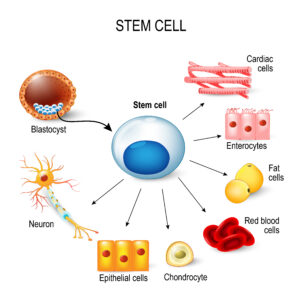 Stem cells have two key properties:
- Self-renewal: They can divide to produce more stem cells.
- Differentiation: They can develop into specialized cells (e.g., blood, muscle, nerve, bone, or skin cells).
They repair damaged tissues, replace worn-out cells, and support growth and maintenance. Embryonic stem cells are highly versatile (pluripotent), while most adult stem cells are more limited (multipotent) and tissue-specific.
Where do they come from
- Embryonic stem cells come from the inner cell mass of a blastocyst (early embryo, ~3-5 days after fertilization).
- Adult stem cells reside in tissues like bone marrow, fat, blood, muscle, and brain.
Lifespan of Stem Cells
Stem cell lifespan varies by type and context:
- Hematopoietic (blood-forming) stem cells can self-renew for a lifetime but decline in function with age.
- Others have limited divisions or remain dormant for years before activating.
- In studies (e.g., mice), individual stem cells show programmed lifespans ranging from months to years; they are not truly “immortal.”
Aging causes stem cell exhaustion (a hallmark of aging) through DNA damage, inflammation, reduced self-renewal, and impaired differentiation, contributing to tissue decline.
Effects of Lifestyle, Diet, Stress, and Exercise
Lifestyle significantly influences stem cell production, mobilization, function, and resistance to aging:
- Exercise: Strongly positive. Regular physical activity (especially aerobic and resistance) increases circulating stem cells, mobilizes them to damaged areas, improves repair (e.g., muscle stem cells), reduces inflammation, and can restore youthful properties to aged stem cells. Strenuous exercise expands primitive stem cell populations in bone marrow. It also counters high-fat diet damage.
- Diet: Nutrient-dense, anti-inflammatory diets (polyphenols in berries, turmeric, green tea; omega-3s; leafy greens; nuts) support stem cell activity. Caloric restriction or intermittent fasting can promote regeneration in some contexts but extremes may impair function. High-fat diets often harm stem cells via inflammation and microenvironment changes.
- Stress: Chronic stress is detrimental—it raises inflammation, disrupts hormones, and impairs stem cell function and tissue repair. Managing it (e.g., via mindfulness) helps preserve them.
- Sleep and overall habits: Quality sleep and avoiding smoking/excess alcohol support cellular health and stem cell niches.
Healthy lifestyles can slow stem cell decline and enhance regeneration.
Effects of the Mind on Stem Cell Activity
- Meditation and mindfulness reduce stress, lower inflammation, and improve psychological resilience, which benefits overall cellular health and recovery (e.g., in stem cell transplant patients).
- Meditation produces increased neurogenesis and neuroplasticity, as well improved immune function, and increased telomerase activity (which supports cell longevity, including stem cells).
How Much Control Do We Have?
- Consistent exercise, balanced diet, stress reduction, and good sleep can boost stem cell numbers/function, slow exhaustion, improve repair, and support healthier aging.
- These won’t make stem cells immortal or fully reverse aging but can enhance vitality, delay decline, and complement medical therapies.
- Genetic factors, age, and disease limit control. Experimental rejuvenation (e.g., via drugs or transplants) shows promise in research but isn’t standard yet.
Stem cell “niches” are specialized microenvironments in tissues that house and regulate stem cells. They integrate cellular, extracellular, and systemic signals to control stem cell self-renewal, quiescence, proliferation, differentiation, and fate decisions.
Definition and Core Functions
A stem cell niche is not just a physical location but a dynamic functional unit. It includes:
- Supporting cells such as stromal tissue, which is the supportive framework of organs and glands. endothelial, immune cells, or specialized niche cells
- Extracellular matrix (ECM) is a dynamic, network of macromolecules that provides structural and biochemical support to surrounding cells. It is primarily composed of two classes of molecules: fibrous proteins (which provide tensile strength and elasticity) and glycoproteins/polysaccharides (which form a hydrating, gel-like ground substance component, such as collagen,
- Soluble factors such cytokines and growth factors
- Physical/biomechanical cues, such as stiffness, lack of oxygen and shear forces).
Stem cell niches play important functions:
- Maintain stem cell “stemness” (undifferentiated state and self-renewal).
- Protect against depletion or over-proliferation (balancing tissue homeostasis and cancer risk).
- Respond to injury, aging, or environmental changes by activating repair.
- Integrate local and systemic signals (e.g., hormones, inflammation).
Niches enable plasticity: stem cells can adapt fates based on niche cues, and in some cases, differentiated cells can de-differentiate if the niche allows.
Major Examples of Stem Cell Niches
- Bone Marrow (Hematopoietic Stem Cell): Perivascular (near blood vessels), involving endothelial cells, mesenchymal stromal cells, and often near trabecular bone (endosteal niche). Regulates blood cell production
- Intestinal Crypts: At the base of crypts in the gut. Paneth cells and mesenchymal cells provide signals to stem cells for rapid epithelial turnover in order to maintain the gut lining or barrier that allows nutrients into the body but keeps out toxins.
- Hair Follicle: Contains epithelial stem cells which support hair regeneration.
- Neural Stem Cell Niches: Subventricular zone (SVZ) and subgranular zone (SGZ) in the brain. Involve ependymal cells, astrocytes, and ECM structures (fractones). Support limited neurogenesis.
- Other: Muscle (satellite cells on myofibers), skin epidermis, adipose tissue, germline (e.g., Drosophila ovary/testis hubs).
Effects of Lifestyle, Aging, and External Factors
- Aging: Niches deteriorate—stiffer ECM, altered composition, increased inflammation, reduced supportive cell function, and changed signaling. This leads to stem cell exhaustion, impaired regeneration, and biased differentiation (e.g., more fat in bone marrow). Systemic factors like chronic inflammation (“inflammaging”) exacerbate this.
- Exercise: Positive—promotes mobilization, improves vascular support in niches, reduces inflammation, and can rejuvenate aspects of aged niches
- Diet: Caloric restriction, fasting-mimicking diets, and polyphenols (e.g., fisetin, quercetin) can enhance niche health through metabolic reprogramming (AMPK, autophagy) and senescence clearance. High-fat diets or malnutrition often harm niches.
- Stress: Chronic stress elevates cortisol and inflammation, disrupting niche signaling and stem cell quiescence.
In summary, stem cell niches are master regulators of tissue maintenance. They are dynamic, responsive to lifestyle, and central to healthy aging and future therapies. Research evolves quickly; for medical applications, consult specialists.
Gut barrier disruption and LPS translocation can compromise intestinal stem cell function in the crypts, both directly and indirectly through inflammation.
Mechanisms of Compromise
Intestinal stem cells reside at the base of the crypts of Lieberkühn. They drive rapid epithelial renewal (~every 3–5 days) and maintain the barrier. Disruption affects them via:
- Direct LPS effects: Intestinal stem cells (ISC) and Paneth cells (which support the niche) express TLR4, the receptor for bacterial lipopolysaccharide (LPS). LPS binding activates signaling that can induce:
Studies show LPS injection or exposure increases crypt cell death, or apoptosis and can shift the balance toward differentiation (e.g., more goblet cells) at the expense of stem cell expansion.
- Indirect effects via systemic and local inflammation:
- Barrier disruption allows LPS and other microbial products to translocate, causing metabolic endotoxemia and low-grade systemic inflammation (elevated cytokines like TNF-α, IL-1β, IL-6).
- These cytokines disrupt the stem cell niche, impair ISC self-renewal, and promote senescence or exhaustion.
- Inflammation damages Paneth cells further compromising the microenvironment.
- Vicious cycle: Compromised interstitial stem cells lead to poorer epithelial repair, worsening barrier leakiness and more LPS translocation.
Evidence from Models
- LPS induces intestinal injury, reduces ISC numbers/function, and impairs regeneration. Probiotics (e.g., Lactobacillus reuteri) can counteract this by promoting ISC expansion.
- Chronic low-grade endotoxemia: Linked to metabolic diseases; it contributes to ongoing low-level damage to the crypt niche and reduced regenerative capacity.
Relevance to Broader Health
This local gut barrier stem cell dysfunction contributes to:
- Persistent gut issues such inflammatory bowel disease where chronic inflammation harms ISCs).
- Systemic problems, as a weakened barrier sustains inflammation.
- Aging and metabolic disease, where stem cell exhaustion is amplified.