

Gut Microbiota and Mental Health: A Comprehensive Review of Gut-Brain Interactions in Mood Disorders
Ishani Mehta , Keshav Juneja , Tharun Nimmakayala , Lajpat Bansal , Shivani Pulekar , Dileep Duggineni , Hana Khan Ghori , Nishi Modi , Salma Younas
1. Psychiatry and Behavioral Sciences, Maharaja Agrasen Institute of Medical Research and Education, Hisar, IND 2. Psychiatry, BJ Medical College, Ahmedabad, IND 3. Medicine and Surgery, Apollo Institute of Medical Sciences and Research, Chittoor, IND 4. General Practice, Davao Medical School Foundation, Davao, PHL 5. Internal Medicine, Siddhartha Medical College, Vijayawada, IND 6. Internal Medicine, JSS Medical College, Mysore, IND 7. Medicine, Government Medical College, Surat, Surat, IND 8. Pharmacy, Punjab University College of Pharmacy, Lahore, PAK
https://pmc.ncbi.nlm.nih.gov/articles/PMC12038870/
The human gut flora of trillions of bacteria is vital for general health and greatly influences digestion, immune system function, and brain development. Through neuronal, hormonal, and immunological channels, the gut-brain axis (GBA), a bidirectional communication network, links the gut microbiota to the central nervous system (CNS). This relationship has been linked to affective diseases, including depressionand anxiety, as well as mental health issues.
This review explores the intricate relationship between gut bacteria and mood disorders, focusing on how gut microbiota-host interactions, immune system modulation, and neurotransmitter control support mental health. The function of important microbial metabolites, including short-chain fatty acids (SCFAs), in preserving blood-brain barrier integrity and modulating neuroinflammation is covered in this review. It also examines the bidirectional impact between gut health and mental health, including how dysbiosis could aggravate mood disorders and how depressed states might change the composition of gut bacteria. Furthermore, we discuss how psychotropic drugs affect gut flora and consider other elements such as nutrition and lifestyle that affect gut microbiome composition. Potential paths for treating mood disorders through gut microbiota modification are presented as emerging treatment techniques, including probiotics,
nutritional therapies, and precision medicine.
The development of new therapeutic approaches for mood disorders depends on the awareness of the GBA. Gut bacteria significantly affect mental health through immune modulation, neurotransmitter generation, and other intricate processes. Future studies should concentrate on large, varied populations to better understand these interactions and to create customized treatments that combine gut microbiota modulation with conventional mental health therapies.
Introduction And Background
The human gut microbiota, composed of trillions of microorganisms, is crucial for overall health, impacting digestion, immune function, and brain health [1]. Recent research has highlighted the gut-brain axis (GBA), a communication network between the gut microbiota and the central nervous system (CNS) through neural, hormonal, and immune pathways, suggesting that the gut microbiota can significantly impact brain function and mental health [2].
Mood disorders such as depression and anxiety are prevalent globally and impose substantial societal and economic burdens [3]. Emerging evidence indicates that the gut microbiota may play a crucial role in mood disorders by affecting neurotransmitter systems (chemical messengers in the brain, such as serotonin and dopamine), immune responses, and stress mechanisms (such as the hypothalamic-pituitary-adrenal (HPA) axis) [4]. The GBA theory proposes that the gut microbiota influences brain function through mechanisms such as the vagus nerve (a major nerve connecting the brain and gut, facilitating direct communication), neurotransmitter production, and immune response regulation [5].
Studies have shown that microbial metabolites such as short-chain fatty acids (SCFAs) (small molecules produced when gut bacteria ferment dietary fiber) affect brain function by altering inflammation and neurotransmitter production [6].
Both clinical and preclinical studies have shown a bidirectional relationship between gut health and mental health, indicating that changes in the gut microbiota can affect mood and behavior, and vice versa. Recent research has advanced our understanding of this link using animal models (laboratory experiments using rodents to study gut-brain interactions) and human clinical trials (research studies involving human participants to test interventions) [7]. Limitations such as small sample sizes, short study durations, and diverse study designs persist and necessitate further research. Our understanding remains incomplete, especially regarding diverse study populations and gut-brain interaction mechanisms [8].
Given these findings, modulating gut microbiota through probiotics, prebiotics, diet, and fecal microbiota transplantation (FMT) is emerging as a potential therapeutic strategy for mental health conditions. Several clinical studies suggest that interventions targeting gut microbiota may alleviate symptoms of depression and anxiety, highlighting the potential for microbiome-based treatments in psychiatric care. However, challenges such as individual variability in microbiome composition, limited large-scale trials, and regulatory concerns must be addressed before these interventions can be widely implemented in clinical practice.
This review aims to synthesize current evidence linking gut microbiota to mood disorders, identify gaps in the literature, and suggest future research directions. It explores microbiota-host interactions, diet,microbial metabolites, and psychotropic medication effects (the influence of antidepressants and antipsychotics on gut microbiota) to provide a detailed view of the gut-brain relationship.
Review
Microbiota-host interaction and brain
The GBA is a bidirectional network that connects the CNS with the enteric nervous system (ENS) in the gastrointestinal (GI) tract. ENS is a network of neurons in the GI tract that controls digestive processes independently of the CNS. It involves neural, hormonal, and immunological pathways. The GBA plays a crucial role in physiological processes like digestion, metabolism, mood, and cognition. Dysfunction in this axis is linked to conditions like irritable bowel syndrome (IBS), depression, anxiety, and neurodegenerative disease, highlighting its potential for novel treatments. Understanding gut-brain connections offers the potential for novel treatments for related disorders.
Pathways of Interaction
Immune system: The immune system crucially links the gut and the brain, coordinating complex interactions. Gut bacteria activate the innate immune system via pattern recognition receptors (PRRs: immune system proteins that detect microbial components, triggering immune responses), such as Toll-like receptors (TLRs: a type of PRR that identifies pathogens and activates immune signaling pathways), on intestinal cells [9]. This triggers the release of cytokines, such as TNF-α, IL-1, and IL-6. These cytokines can cross the blood-brain barrier (BBB) and affect brain function by altering neurotransmitter metabolism, including gamma-aminobutyric acid (GABA), serotonin, and dopamine, which are essential for mood and cognitive functions [10,11]. Immune activation and disruption of neurotransmitter levels can exacerbate neuropsychiatric disorders like depression and anxiety. Inflammation can also compromise the intestinal barrier, increase gut permeability, and intensify inflammation and immune response [12]. The vagus nerve facilitates bidirectional communication between the gut and the brain. Gut immune activity activates vagal
afferents that signal the brain, whereas brain signals regulate gut immune responses via the cholinergic anti-inflammatory pathway [13]. This interaction influences the autonomic nervous system (ANS) and HPA axis (a hormonal system regulating stress responses, involving the hypothalamus, pituitary gland, and adrenal glands), modulating stress responses and creating a feedback loop between stress and immunity [14]. Imbalances in immune signaling within the GBA are linked to diseases such as Parkinson’s and Alzheimer’s through neuroinflammation and neuronal damage [15]. Dysbiosis, an imbalance in gut microbiota composition, can affect immune function, digestion, and mental health. Understanding these immunological interactions is critical for designing medicines that restore GBA balance and treat associated diseases.
Vagus nerve: The vagus nerve, or tenth cranial nerve (CN X), is the longest cranial nerve, extending from the brainstem to the heart, lungs, and GI tract. The vagus nerve is an intricate network of motor and sensory fibers that controls various physiological processes. It plays a crucial role in the GBA by transmitting sensory information from the gut to the brainstem. Receptors in the GI tract detect changes and send these data to the brainstem via vagal afferent fibers [16]. This information is processed in the nucleus tractus solitarius (NTS) and then relayed to higher brain regions, allowing for the perception of gut sensations and appropriate responses [17]. The nerve also controls motor functions in the digestive system, including GI motility, secretion, and absorption, through its influence on smooth muscles, glands, and enteric neurons [18]. The vagus nerve regulates the ENS and neuroimmune functions, maintains immune balance, and limits
inflammation through acetylcholine [19]. Vagus nerve stimulation (VNS) has the potential to treat these conditions by restoring the vagal tone and modulating neuroimmune interactions. Figure 1 visually represents the complex interactions between the gut microbiota and the brain, specifically highlighting the GBA.
2025
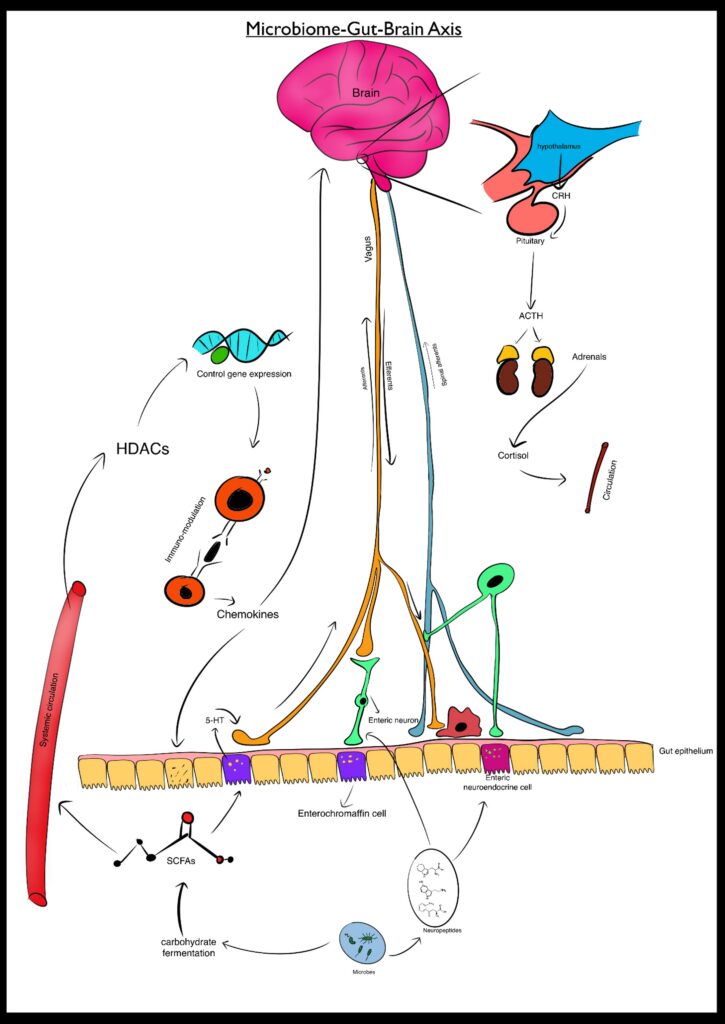
FIGURE 1: Microbiome-Gut-Brain Axis: Bidirectional Communication Pathways Schematic representation of the microbiome-gut-brain axis. The diagram shows the bidirectional communication between the gut and the brain through neural, hormonal, and immune pathways, emphasizing the role of gut microbiota in modulating brain function and mental health. HDACs: histone deacetylases; 5-HT: 5-hydroxytryptamine; SCFAs: short-chain fatty acids; CRH: corticotropin-releasing hormone; ACTH: adrenocorticotropic hormone Credit: Image created by the author
Microglia and BBB: Microglia are specialized immune cells in the CNS that protect against infections and remove damaged neurons and debris. Research indicates that microbial metabolites from the gut can influence microglial activation via pathways involving cytokines, neurotransmitters, and neurotrophic factors [20]. The interaction between microglia and gut bacteria is key for regulating neuroinflammation, synaptic plasticity (the ability of neurons (nerve cells) to strengthen or weaken their connections over time, which is essential for learning and memory), and neuronal balance, thus affecting behavior and brain function. The BBB acts as a selective barrier between the bloodstream and the CNS but can also facilitate the transfer of gut-derived signals, including immune mediators and microbial metabolites, into the brain, indicating its role in gut-brain communication [21]. Gut-derived signals can increase BBB permeability through inflammatory mediators, allowing proinflammatory substances to enter the brain, which may lead to neuroinflammation and neurological conditions. Conversely, beneficial gut metabolites, such as SCFAs, protect the BBB and reduce neuroinflammation [20,22], whereas gut chemicals also influence BBB permeability and immune cell activity. Gut-derived chemicals can affect BBB permeability and neuroinflammation by altering peripheral immune cell activity, including that of T cells and monocytes [23].
Role of Neurotransmitters
Gut microbiota plays a vital role in modulating various neurotransmitters, thereby optimizing mood and cognitive function through several complex mechanisms. The synthesis of neurotransmitters or their precursors, which can cross the BBB and contribute to neurotransmitter production in the brain, is facilitated by enzymes released by gut bacteria [24]. Gut microorganisms produce metabolites that signal intestinal enteroendocrine cells to produce and release neurotransmitters. These neurotransmitters can act locally in the ENS or transmit signals to the brain via the vagus nerve [25]. Gut bacteria affect neurotransmitter levels by modulating the immune system and producing anti-inflammatory metabolites like SCFAs, which can indirectly influence brain health [26].
Gut microbiota affects neurotransmitter balance and influences mental health and cognition. Gut bacteria interact with the CNS through neurotransmitters like GABA, dopamine, norepinephrine, serotonin, and histamine. Serotonin is a neurotransmitter found in both the central and peripheral nervous systems, with over 90% of the gut regulating peristalsis, pain, nausea, and secretion. It is produced by enterochromaffin cells using the enzyme tryptophan hydroxylase 1 (TpH1), which converts tryptophan to serotonin [27]. Gut microbiota regulates TpH1 in enterochromaffin cells, boosting serotonin levels in the gut [28]. While peripheral serotonin cannot cross the BBB, the gut microbiota influences central serotonin by altering tryptophan metabolism, affecting its levels in
Dopamine, a crucial neurotransmitter that plays crucial roles in mood, motivation, and motor control, is produced in brain regions such as the substantia nigra and ventral tegmental areas. Dysregulation of dopamine levels is linked to neurological and psychiatric disorders such as Parkinson’s disease, schizophrenia, and addiction [30-32]. In the gut, bacterial strains like Staphylococcus can produce dopamine from levodopa (L-DOPA) with the help of staphylococcal aromatic amino acid decarboxylase (SadA), affecting gastric secretion, blood flow, and motility [25].
GABA, the primary inhibitory neurotransmitter in the CNS, helps to balance neuronal excitation and inhibition, regulates muscle tone, has a calming effect on the brain, and controls anxiety, stress, and fear. GABA is synthesized from glutamate by the enzyme glutamate decarboxylase, which is linked to several neurological and psychiatric disorders such as epilepsy, anxiety disorders, and depression [33,34]. Evidence has shown that GABA is produced by various microorganisms, and germ-free animals show reduced peripheral GABA levels, highlighting the role of the gut microbiota [35]. Although GABA from gut microbes typically does not directly cross the BBB, microbiota-derived metabolites, such as acetate, can traverse the barrier and may influence GABA metabolism in the CNS, with mechanisms still being explored [24].
Norepinephrine, a neurotransmitter and hormone crucial for regulating arousal, alertness, and the fight-orflight response, is synthesized in the locus coeruleus and adrenal medulla. It also affects cardiovascular functions, such as heart rate and blood pressure, and cognitive processes, such as attention and memory consolidation. Dysregulation is linked to various conditions, including anxiety, Parkinson’s disease, and hypertension [36]. In vivo studies have shown that certain bacteria can produce norepinephrine, with reduced levels in germ-free mice and rising levels after microbiota colonization, although whether this is due to direct bacterial production or indirect effects remains unclear [37,38]. The microbiota significantly affects the catecholamine systems. For instance, antibiotic-treated mice showed heightened cocaine sensitivity, which was normalized by SCFAs from microbial fermentation, suggesting an indirect impact on norepinephrine [39].
Impacts of microbial metabolites
Gut microbiota produce key neurotransmitters involved in mood regulation. Lactobacilli secrete acetylcholine and GABA, whereas Candida, Streptococcus, Escherichia, and Enterococcus secrete serotonin. Bacillus and Serratia secrete dopamine [40]. These neurotransmitters play essential roles in emotion and mood regulation [41].
SCFAs, including acetate, propionate, and butyrate, are produced by gut microbiota via carbohydrate fermentation [42]. SCFAs cross the BBB through monocarboxylate transporters (MCT) and influence the immune system and gene expression via free fatty acid receptors and histone crotonylation [42,43]. Low SCFA levels are associated with major depressive disorders, and SCFA supplementation reduces depressive behaviors in mice, although human studies are less conclusive [44,45].
Brain-derived neurotrophic factor (BDNF) is critical in the GBA. In mice administered antibiotics, gut dysbiosis leads to altered BDNF levels in the hippocampus and amygdala, correlating with behavioral changes [46].
Tryptophan, GABA, and dopamine are vital for mood modulation. Tryptophan is a serotonin precursor, and its metabolites, such as kynurenine, affect pro-inflammatory cytokines and are linked to mood disorders like postpartum depression [47]. GABA, produced by Bacteroides, Parabacteroides, and Escherichia, acts as both an excitatory and inhibitory neurotransmitter, and its modulation influences depressive behavior [48]. Dopamine, produced by gut microbes such as Lactobacillus and Bacillus, is essential for reward-related behaviors; however, the role of gut-derived DA in mood regulation requires further exploration [49]. Nitric oxide (NO), produced by gut microbiota through anaerobic respiration, is associated with suicidality, and bacterial metabolites such as indole downregulate NO production and reduce neuroinflammation [50,51].
Hydrogen sulfide, produced by gut microbes via cysteine degradation, affects synaptic plasticity, a key element in mood disorders [52]. Decreased hydrogen sulfide levels are linked to depression severity, making it a potential therapeutic target [53]. Carbon monoxide (CO), produced by the microbiota through heme oxygenase 1 (HO1), has antidepressant effects in animal studies by increasing dopamine and affecting heme oxygenase activity in the hippocampus [54].
The gut microbiota synthesizes various polyamines such as spermine, spermidine, and putrescine in the presence of amino acid precursors [55]. In humans, putrescine is produced in the cytoplasm of cells by decarboxylation of ornithine catalyzed by the enzymes ornithine decarboxylase (ODC), spermine, and spermidine, which are synthesized by S-adenosyl-methionine decarboxylase [56]. The brain exhibits a cellular stress response referred to as the polyamine-stress response (PSR) when exposed to stressful stimuli, with an initial, brief elevation in polyamine metabolism [56]. The magnitude of the response was found to correlate with the intensity of the stress; however, in the presence of chronic stress, a partial response was observed, leading to the accumulation of putrescine and reduced levels of higher polyamines such as spermidine and spermine [56,57]. Long-term inhibition of polyamine synthesis due to chronic stress has been found to deplete brain polyamines and alter emotional reactivity to stressors [58]. Decreased levels of polyamines are found in the hippocampus and accumbens septi in a rat model, and low plasma levels of agmatine are observed in depression, which is normalized to treatment [58]. S-adenosyl methionine, vital for the production of polyamines, has been used to treat depression in humans [59].
Figure 2 highlights the specific interactions between gut microbiota, neurotransmitters, and mood regulation. 2025
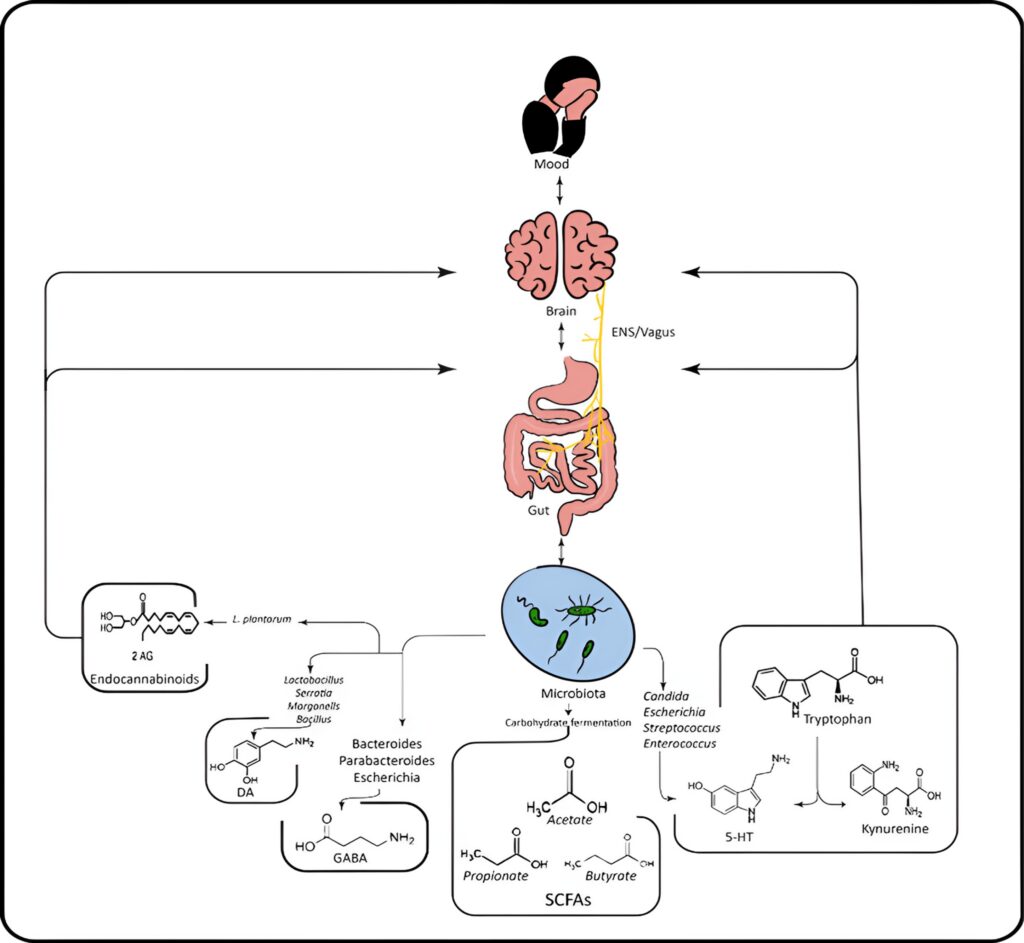
FIGURE 2: Gut Microbiota, Neurotransmitters, and Mood Regulation The interplay between gut microbiota, neurotransmitters, and mood. This figure illustrates how gut-derived neurotransmitters and metabolites influence mood regulation through the gut-brain axis. ENS: enteric nervous system; vagus: vagus nerve; SCFAs: short-chain fatty acids; 5-HT: 5-hydroxytryptamine; DA: dopamine; GABA: gamma-aminobutyric acid; 2-AG: 2-arachidonoylglycerol Credit: Image created by the author